Your brain has two fuels. You're probably only using one.
On October 27, I joined naturopath Dino Halikas for his Tuesday night webinar. The topic: your brain, its fuel, and why ketones are a lot more than energy. Here's the core of it, in ten minutes.
- Your brain runs on two fuels: glucose and ketones (mainly BHB).
- BHB feeds your cells, but it also talks to them. It's a signaling molecule.
- Your inflammation alarm, NLRP3, shouldn't be shut off. It should be tuned.
- Your brain becomes what you repeat. And nobody changes alone.
Mike Tyson said it better than any book: "Everybody has a plan until they get punched in the mouth."
Science has its limits. In real life, to be tough, you need the right brain. And to have the right brain, you need the right fuel.
That was my message on Dino's show. I usually do this in French. This time it was English, and I had butterflies, which I normally don't. Hold that thought. It turns out to be the whole point.
Two fuels, not one
Your brain runs on glucose. Sugar. That's its everyday fuel.
But it has a second one: ketones, mainly BHB (beta-hydroxybutyrate). Your liver makes them from fat when sugar runs low.
Can you survive on glucose alone? Sure. But you're not here just to survive.
Stephen Cunnane's research at the Université de Sherbrooke shows it clearly: the more ketones in your blood, the more your brain takes in. During a prolonged fast, they can cover up to two-thirds of its energy.
And your heart? It goes first. In rat hearts, in the lab, ketones get burned ahead of sugar (Williamson and Krebs, 1961).
KetoZen: close to keto, still human
I went low-carb at 19, following my mentor Charles Poliquin. At one point I did strict keto three years straight. Then I realized I really like a small glass of Italian wine.
I'd become so rigid I wasn't human anymore. Literally.
That's where KetoZen comes from. In my words that night: "We're pretty close to keto, but we're also human, and we're able to smile."
Ketosis: how to get there
Ketosis means at least 0.5 millimoles of BHB per liter of blood. You can check it with a blood ketone meter, the same kind of device people use for glucose.
Three roads in:
- Fast. Skip a few meals and your sugar stores drop.
- Cut the carbs, and replace them. The trap is cutting sugar without adding fat or protein. Then your body is just short on energy. I cook with butter every day, and tallow doesn't scare me.
- Move for a long time. A long workout drains your sugar stores.
The strategy isn't the problem. Real life is: the adjustment period, consistency, dinners out, family, travel, stress, short nights.
Sooner or later, something tough happens. Motivation drops. I eat potatoes. I drink a little too much wine.
As I told Dino's audience: "The failure in a ketogenic strategy is a human failure. The strategy worked." And it's not a character flaw. It's your biology.
Endogenous or exogenous
The ketones your body makes are endogenous. To get them, you have to get there first: time, consistency, and real life getting in the way.
Exogenous ketones are the ones you drink: BHB bound to a mineral, in your blood without the wait, even if you're not in ketosis yet (Stubbs et al., 2017).
They kind of bypass the fact that you're human. In my experience, when motivation dips but your ketones stay up, it's a lot easier to get back to good habits.
One rule: they add to your lifestyle. They don't replace it. Our complete guide to exogenous ketones →
Far more than energy: a signal
Yes, BHB is energy for your brain, your heart and your muscles. But that's not all.
It's also a signaling molecule. It carries a message, not just fuel. In mouse research, it's been seen to:
- open genes that protect the cell (Shimazu et al., 2013);
- switch on BDNF during exercise, the brain's fertilizer (Sleiman et al., 2016);
- calm immune cells by knocking on their door (Rahman et al., 2014);
- ease off the gas on nerves that rev too high (Kimura et al., 2011).
Fuel feeds. A signal commands.
To me, that's also why you need to eat your fat and your protein: to tell your brain it's okay, it's going to survive. The more it gets that message, the more it lets you into its upper floors.
Your inner alarm: NLRP3
Inside your immune cells there's a smoke detector. It's called NLRP3. It picks up stress or danger and sounds the alarm, and inflammation kicks in.
The trouble starts when it never stops ringing. Picture Homer Simpson at the plant, mashing every button at once.
Here's how I put it to Dino: inflammation is like toothpaste. Squeeze it all day, and there's none left when you really need it.
Your body has to be able to sound the alarm. Twist an ankle, and inflammation is good information. It brings in what you need to repair.
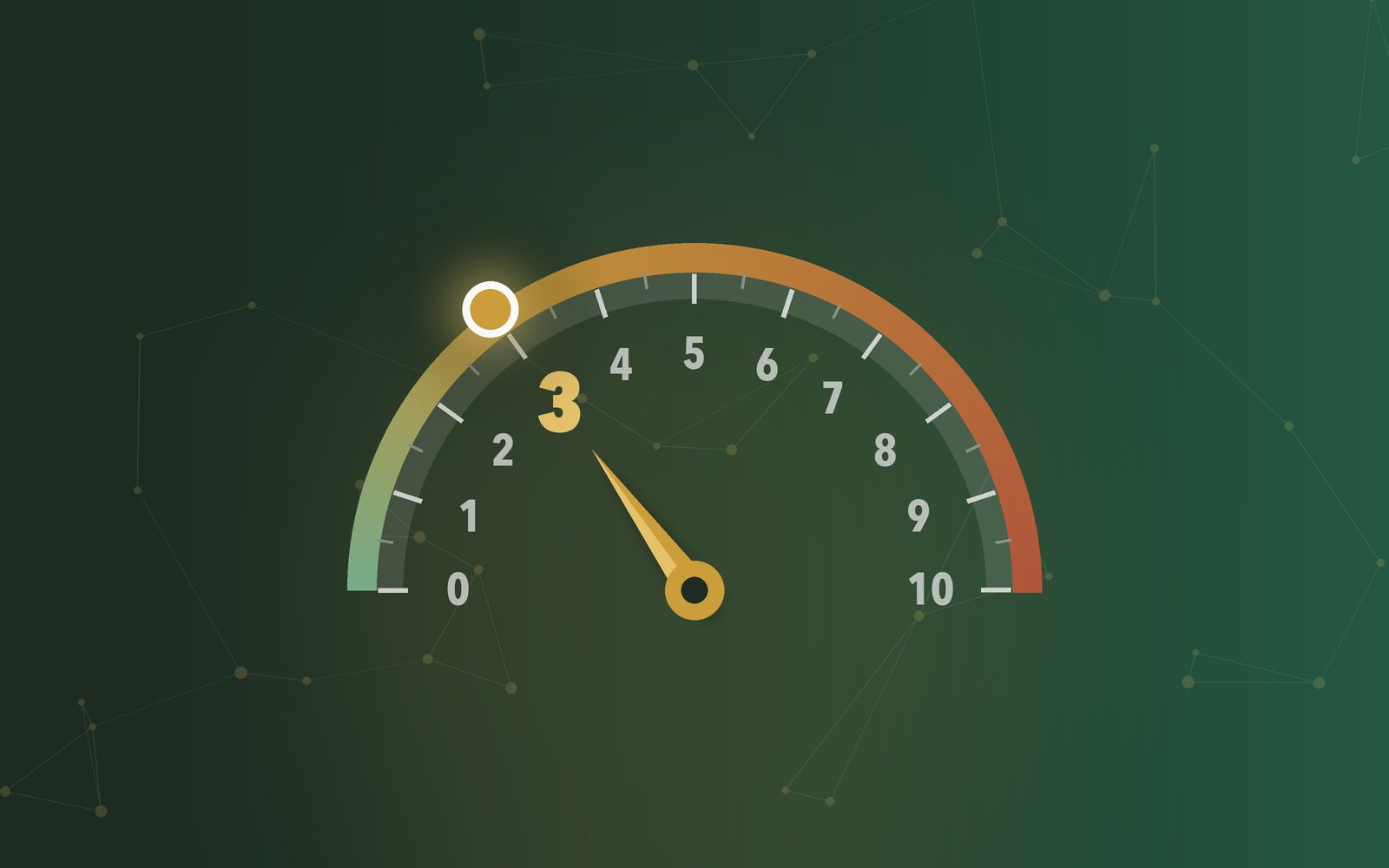
I picture it on a dial from 0 to 10. "You want the inflammation always at 3. If it's at 2, it's a little bit too low. And if it's at 10, it's not good." That's an image, not a measurement. No lab test gives your NLRP3 a number.
What the science says: in mice, and in human cells in the lab, BHB keeps NLRP3 from switching on (Youm et al., Nature Medicine, 2015). Not because it feeds the cell. Because it talks to it.
And the best part: in that same study, it calmed NLRP3 without shutting off two other detectors that respond to microbes.
The goal isn't to shut the alarm off. It's to tune it.
When the amygdala takes the wheel
Your brain is about 2% of your body weight and roughly 20% of your energy at rest. Your body's hungriest engine.
Right behind your forehead sits your CEO: the prefrontal cortex. It decides, focuses, holds back and plans.
Deep inside sit two little almonds: the amygdala. Its job is spotting danger, and it reacts before you have time to think. You jump at the snake on the trail, then see it's a stick.
When your system is on alert all the time, the amygdala takes the wheel. And everything turns black and white.
Here's what I've seen for years: "If the amygdala is in charge, everything will be polarized. Suddenly, the person that wants to help you will become your enemy." Not because you're not smart. Because you've lost access to the part of your brain that sees nuance.
You don't need to become superhuman. Start by being fully human. For that, you need your CEO back.
What you repeat changes you
Neurons that fire together wire together. That's neuroplasticity: your brain keeps rewiring itself your whole life.
London taxi drivers hold thousands of streets in memory. The back of their hippocampus is bigger, and the more years they've driven, the bigger it is (Maguire et al., 2000).
People who practiced juggling for three months gained gray matter. Three months off, and it shrank back (Draganski et al., 2004).
It works both ways. For good habits. And for bad ones.
I compare it to a tattoo: if you don't use it, it gets more transparent over time. It's still there. You just can't see it anymore.
The trap is that most people focus so hard on what they don't want that they carve it in again. And again. And again.
And most people who are all over the place aren't really lost. They just haven't picked a destination.
Focus on where you're going. Not on what you're running from.
Move. A lot more.
If you're looking for an answer, odds are it's in movement. It's not the next supplement. It's not the perfect dosage. Get off the couch.
I'm including myself. In Italy, I walk about 20,000 steps a day. At home, my average is around 4,000. That's bad.
Two things:
- Raise your baseline. Walk, dance, move your body, several times a day. Walking is my recovery tool after jiu-jitsu.
- Add a challenge. If you always grab the 15-pound dumbbell, your body has no reason to adapt. Go for the 25.
When you move, your muscles send signals to your brain, and your brain makes BDNF. The fertilizer again.
And sleep. During the day, what you learn goes on your USB stick, the hippocampus. In deep sleep, your day replays and your brain saves it to the hard drive (Diekelmann and Born, 2010).
The MickSlow pyramid
Maslow is a bit complicated. So here's my version:
- Survival. Your nervous system is in overdrive. You're back in animal mode.
- Optimization. Sleep, move, eat real food. Your CEO comes back.
- Performance. Now you can add intensity.
You climb in order. You don't skip levels. In survival mode, intensity wrecks you: physically, mentally and, honestly, spiritually.
My formula: Time × Intensity = speed of change.
"The goal is never to be calm." Too calm, you doze off and chase comfort. In overdrive, you panic and the alarm drives. In between is your zone: enough pressure to grow, not enough to freeze you. "The zone that doesn't paralyze you."
That night, my zone was English. Uncomfortable for my identity. Not paralyzing. That's exactly where change happens.
The physiological sigh: two inhales through the nose, one long exhale through the mouth (Balban et al., 2023).
You don't change alone
Belonging isn't a bonus. It's a basic human need (Baumeister and Leary, 1995).
And look at what it does:
- Your crew calms your alarm. In a lab stress test, a friend's support lowered the stress hormone (Heinrichs et al., 2003).
- Together, you stick with it. In one program, 95% of people who came with friends and got support finished it, versus 76% of those who came alone without that support (Wing and Jeffery, 1999).
- Habits travel. People quit smoking in clusters, friend to friend (Christakis and Fowler, 2008).
Dino backed this up on his own during the Q&A. The groups he's seen succeed, and that are still going, were built as communities. Information sessions with no follow-up didn't stick.
"I have my entire tribe behind me all the time. So I fight for them, and they fight for me." And on the night you're not at your best, someone else picks up the slack.
As I said to close the talk: being surrounded by people like you is the ultimate way to amplify the human experience.
Watch the replay
The full webinar, including Dino's Q&A, will be available as a replay on the Aidun Academy, Vitali's webinar platform (vitali.ca). We'll add the link here as soon as it's live.
Your next step
Your brain becomes what you repeat. Two fuels. A signal. A well-tuned alarm. Movement, sleep. And repetition.
Take care of your CEO.
Frequently asked questions
What is NLRP3?
A detector inside your immune cells. It picks up stress or danger and sounds the inflammation alarm. In mice and in human cells in the lab, BHB keeps it from switching on (Youm et al., 2015). It's a mechanism being studied, not a promised result.
Do I have to be in ketosis to have BHB in my blood?
No. Your body makes it when you're in ketosis, but exogenous ketones put BHB in your blood without the wait, even if you're not in ketosis yet. They add to your habits. They don't replace them.
Are exogenous ketones for everyone?
If you take medication, especially for diabetes or blood pressure, talk to your doctor or pharmacist first. Dino flagged it during the webinar: some diabetes drugs, the SGLT2 inhibitors, call for extra caution. Same if you're pregnant or breastfeeding.
Where do I start?
At the bottom of the pyramid: sleep, move more, eat real food. Then add a challenge. And surround yourself with people: you change faster as a crew.
For the curious: the studies cited
- Cunnane et al., Frontiers in Molecular Neuroscience, 2016 · Owen et al., Journal of Clinical Investigation, 1967
- Williamson and Krebs, Biochemical Journal, 1961
- Stubbs et al., Frontiers in Physiology, 2017
- Shimazu et al., Science, 2013 · Sleiman et al., eLife, 2016 · Rahman et al., Nature Communications, 2014 · Kimura et al., PNAS, 2011
- Youm et al., Nature Medicine, 2015 · Medzhitov, Nature, 2008
- Raichle and Gusnard, PNAS, 2002 · LeDoux, Annual Review of Neuroscience, 2000
- Hebb, The Organization of Behavior, 1949 · Maguire et al., PNAS, 2000 · Draganski et al., Nature, 2004
- Diekelmann and Born, Nature Reviews Neuroscience, 2010 · Balban et al., Cell Reports Medicine, 2023
- Baumeister and Leary, Psychological Bulletin, 1995 · Heinrichs et al., Biological Psychiatry, 2003 · Wing and Jeffery, Journal of Consulting and Clinical Psychology, 1999 · Christakis and Fowler, New England Journal of Medicine, 2008

I've been studying food, the body, and human energy since I was 15. How you feel first, the science to back it up. Learn more →